Lexington Gardens
Lexington Gardens
  • Home
  • Workshops
  • Plants
  • Gift Cards
  • Shop
  • Spring Time
  • Employment Opportunities
  • More
    • Home
    • Workshops
    • Plants
    • Gift Cards
    • Shop
    • Spring Time
    • Employment Opportunities
  • Sign In
  • Create Account

  • Orders
  • My Account
  • Signed in as:

  • filler@godaddy.com


  • Orders
  • My Account
  • Sign out

Call Our Experts

Signed in as:

filler@godaddy.com

  • Home
  • Workshops
  • Plants
  • Gift Cards
  • Shop
  • Spring Time
  • Employment Opportunities

Account

  • Orders
  • My Account
  • Sign out

  • Sign In
  • Orders
  • My Account
Call Our Experts

Garden Essentials

Red Pontiac Potatoes

 Red Pontiac seed potatoes are a popular, reliable, and early-maturing (80–100 days) red-skinned variety with crisp white flesh, ideal for beginners due to their adaptability and high yields in varied soils. They are best planted in early spring, 3–5 inches deep and 12–15 inches apart, in full sun. 

 Key Characteristics & Tips

  • Appearance: Deep red skin with shallow eyes and white flesh.
  • Best Use: Excellent for new potatoes, boiling, and mashing.
  • Yield & Growth: Highly productive with a large set, often producing "huge" tubers, so consider closer spacing to manage size.
  • Soil & Planting: Thrives in loose, loamy soil. They are a determinate variety, typically forming potatoes in one layer, which makes them easy to manage.
  • Storage: Good storage potential.
  • Hardiness: Suitable for zones 3-9.

Planting Procedure:

  • Cutting: If seed potatoes are larger than 1 inch in diameter, they can be cut into pieces, ensuring each piece has 1–2 eyes.
  • Healing: Allow cut pieces to cure (dry) for 2–3 days before planting to prevent rot.
  • Hilling: As plants grow, cover the stems with soil or mulch 3–4 times throughout the season to increase yield and prevent green tubers.
  • Harvest: Harvest when plants turn brown, or pick "new potatoes" early in the season. 

Red Norland Potatoes

 Norland seed potatoes are a popular, early-season variety with bright red skin, shallow eyes, and crisp white flesh, ideal for northern climates and quick harvests. They are highly productive, disease-resistant (scab, blight), and perfect for boiling, roasting, or salads. These potatoes are generally planted in early spring and mature in 60-90 days.  

 Key Characteristics & Tips

  • Variety Types: Includes standard Red Norland and Dark Red Norland, the latter of which holds its deep red color better.
  • Planting: Plant 3-4 inches deep, 12-15 inches apart, in rows 30-36 inches apart, 
  • Spacing: 12-15 inches apart, says True Leaf Market Seed Company.
  • Hilling: When plants reach 8 inches tall, mound soil around them to 8-12 inches to prevent greening, says True Leaf Market Seed Company.
  • Harvest: Early-season, ready in 60-80 days for new potatoes or 90-100 days for full maturity.
  • Yield: High-yielding, often producing up to 10-15 lbs of potatoes for every 1 lb planted
  • Red Norland potatoes are widely adapted, easy to grow, and have excellent resistance to diseases like scab and hollow heart. Planting Procedure:
  • Cutting: If seed potatoes are larger than 1 inch in diameter, they can be cut into pieces, ensuring each piece has 1–2 eyes.
  • Healing: Allow cut pieces to cure (dry) for 2–3 days before planting to prevent rot.
  • Hilling: As plants grow, cover the stems with soil or mulch 3–4 times throughout the season to increase yield and prevent green tubers.
  • Harvest: Harvest when plants turn brown, or pick "new potatoes" early in the season. 

Yukon Gold Potatoes

Yukon Gold Potatoes

Yukon Gold seed potatoes are popular early-to-mid-season, yellow-fleshed tubers known for their buttery flavor, smooth thin skin, and high versatility in cooking (boiling, baking, mashing). They are best planted in full sun, 12–18 inches apart in well-drained soil, and usually mature in 70-100 days 

 Key Characteristics & Tips:

  • Maturity: 70–90 days.
  • Yield: Medium to heavy, producing medium-large, round, shallow-eyed tubers.
  • Planting Depth: 2–3 inches deep, with 12-18 inches of space between plants.
  • Soil and Sunlight: Prefers loose, well-drained soil with a pH of 6.0–7.0. Needs 6-8 hours of full sun.
  • Hardiness: Not frost-hardy.
  • Spacing: Rows should be spaced 30–36 inches apart. 

Usage and Care:

  • Harvesting: Small, new potatoes can be harvested in 7-8 weeks, while full-sized tubers are ready in 80-100 days after foliage dies back.
  • Storage: They have excellent storage ability.
  • Usage: Ideal for, baking, mashing, roasting, and frying. 

Planting Procedure:

  • Cutting: If seed potatoes are larger than 1 inch in diameter, they can be cut into pieces, ensuring each piece has 1–2 eyes.
  • Healing: Allow cut pieces to cure (dry) for 2–3 days before planting to prevent rot.
  • Hilling: As plants grow, cover the stems with soil or mulch 3–4 times throughout the season to increase yield and prevent green tubers.
  • Harvest: Harvest when plants turn brown, or pick "new potatoes" early in the season. 

Kennebec Potatoes

Yukon Gold Potatoes

 Russet Burbank seed potatoes produce the industry-standard, large, brown-skinned, and white-fleshed baking potato, often called the "Idaho potato". Known for a mealy texture, they are excellent for baking, frying, and long-term storage. They are late-season, high-yielding, and prefer cool, moist growing conditions.  Seed Potatoes:

  • Growing Cycle: Late-season variety taking 110–130+ days to reach maturity.
  • Planting: Plant as soon as the ground can be worked in spring, ideally when soil is around 45°F–60°F.
  • Spacing: Plant seed pieces 12–18 inches apart in rows 3 feet apart.
  • Soil/Conditions: Thrives in deep, loose, well-draining soil with a pH of 5.5–6.5. They require consistent moisture to avoid tuber defects like knobs.
  • Yield/Habit: Produces high yields of large, oblong tubers. They are susceptible to scab, Verticillium wilt, and viruses, requiring careful management.
  • Storage: Excellent for long-term storage.

Planting Procedure:

  • Cutting: If seed potatoes are larger than 1 inch in diameter, they can be cut into pieces, ensuring each piece has 1–2 eyes.
  • Healing: Allow cut pieces to cure (dry) for 2–3 days before planting to prevent rot.
  • Hilling: As plants grow, cover the stems with soil or mulch 3–4 times throughout the season to increase yield and prevent green tubers.
  • Harvest: Harvest when plants turn brown, or pick "new potatoes" early in the season. 

Russet Burbank Potatoes

Kennebec seed potatoes (80-100 days) are high-yielding, mid-season, all-purpose white potatoes known for their thin, light-tan skin, white flesh, and excellent storage capabilities. Released by the USDA in 1948, they are highly resistant to late blight and produce large, oval, uniform tubers preferred for frying, baking, and mashing. 

 Key Facts About Kennebec Potatoes:

  • Best Uses: Famous for producing low-moisture tubers perfect for French fries and potato chips, but also excellent for mashing, roasting, and boiling.
  • Yields/Growth: Known for heavy, dependable yields of large tubers. They are fast-growing and adaptable to many regions (Zones 3-9).
  • Disease Resistance: Highly resistant to late blight (foliage and tuber) and mild mosaic viruses (PVA, PVY).
  • Storage: They possess excellent long-term storage characteristics, keeping well through winter.
  • Plant Traits: The plant is large, with white flowers, and produces tubers that detach easily from vines at harvest.
  • Spacing: Plant 8–10 inches apart to manage tuber size, as they can grow very large. 

Planting Procedure:

  • Cutting: If seed potatoes are larger than 1 inch in diameter, they can be cut into pieces, ensuring each piece has 1–2 eyes.
  • Healing: Allow cut pieces to cure (dry) for 2–3 days before planting to prevent rot.
  • Hilling: As plants grow, cover the stems with soil or mulch 3–4 times throughout the season to increase yield and prevent green tubers.
  • Harvest: Harvest when plants turn brown, or pick "new potatoes" early in the season. 

Planting Tips

 In Michigan, the best time to plant potatoes is generally from late April to June. While you can plant as early as 2–6 weeks before the last expected frost, planting in cold, water-logged soil can lead to seed decay. 

  • Chitting (Optional): To give plants a head start, place tubers in a cool, bright spot for 2–4 weeks before planting to encourage short, green sprouts.
  • Cutting: Large potatoes can be cut into golf-ball-sized pieces. Ensure each piece has at least 1 or 2 "eyes" (buds).
  • Curing: If you cut your seed potatoes, let them sit in a dry place for 24–48 hours before planting so the cut surfaces can "callus" over, which prevents rot.

2. Soil and Site Selection

  • Location: Choose a spot with full sun (at least 6–8 hours daily).
  • Soil Type: Potatoes thrive in loose, sandy loam or well-drained soil rich in organic matter.
  • pH Level: Aim for a slightly acidic soil pH between 5.8 and 6.5. Maintaining a lower pH can help prevent potato scab.
  • Amendment: Mix in fresh compost or a balanced fertilizer before planting, as potatoes are "heavy feeders" requiring high levels of nitrogen, phosphorus, and potassium.

3. Planting Steps

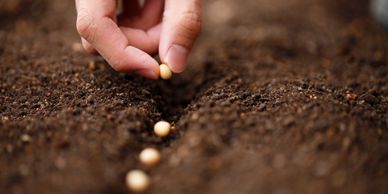
  • Trenching: Dig trenches about 4 to 6 inches deep.
  • Spacing:
    • In-row: Space seed pieces 9 to 12 inches apart.
    • Between rows: Space rows 30 to 36 inches apart.
  • Placement: Place seed pieces in the trench with the eyes facing up and cover with about 2 inches of soil initially. 

4. Ongoing Care

  • Hilling: When the plants reach 8 to 12 inches tall, mound (hill) soil or mulch around the base of the plant until only the top few inches of leaves are visible. This protects developing tubers from sunlight, which turns them green and toxic.
  • Watering: Provide roughly 1 to 2 inches of water per week. Consistent moisture is most critical during tuber formation (after flowering).
  • Pest Control: Keep an eye out for the Colorado potato beetle, a common pest in Michigan gardens. Hand-picking or using approved insecticides can manage infestations. 

Let's Grow Together


Copyright © 2026 Lexington Gardens - All Rights Reserved

  • Workshops
  • Plants
  • Gift Cards
  • Spring Time
  • Gift Cards
  • Privacy Policy
  • Terms and Conditions

Cookie Policy

We use cookies to analyze website traffic and optimize your website experience. By accepting our use of cookies, your data will be aggregated with all other user data.

DeclineAccept